It’s everyone’s business
It’s everyone’s business
We can all play our part when it comes to ensuring the quality of products in stores across the country
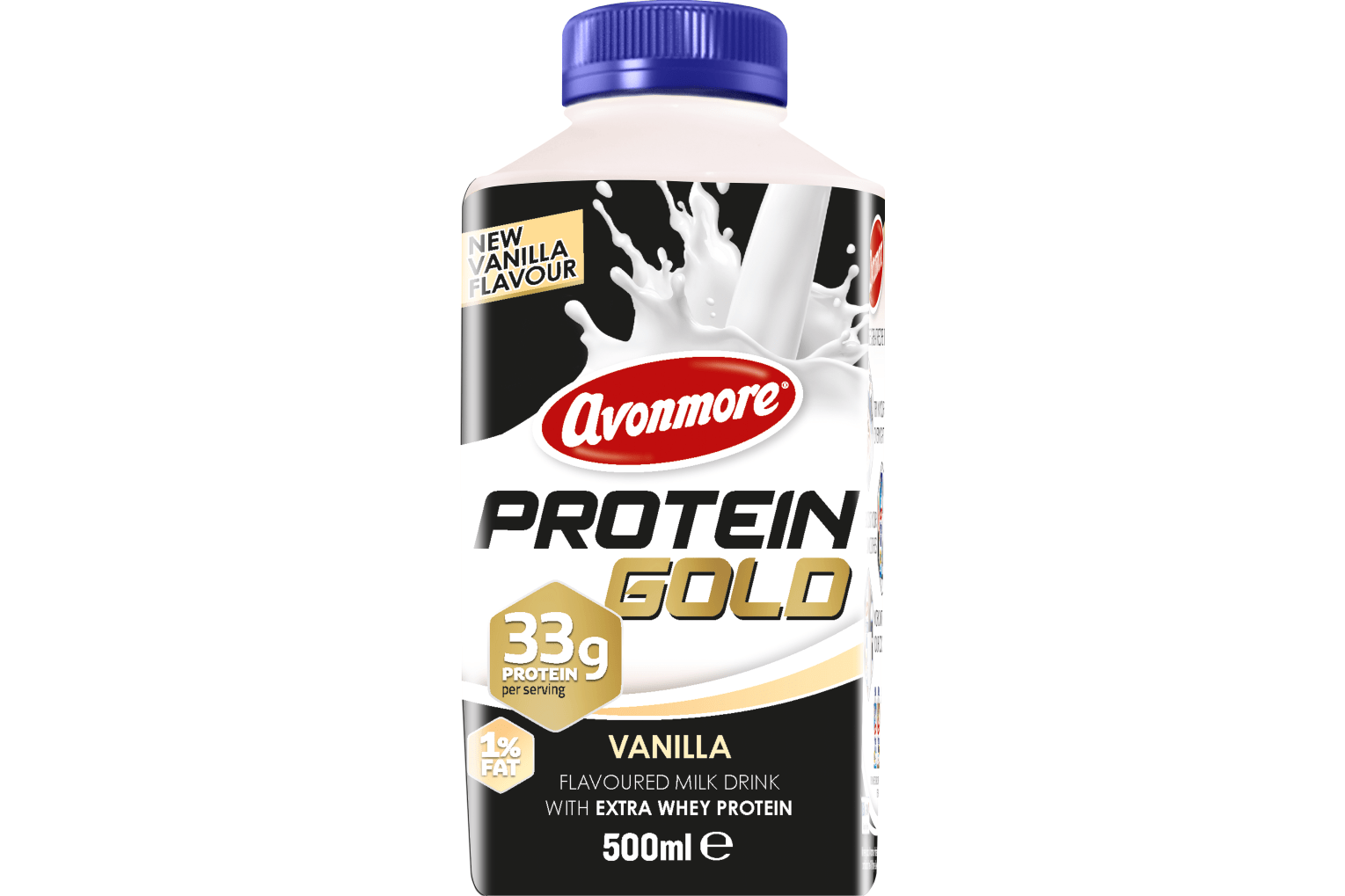
During a recent visit to a Centra store in Kilkenny, a colleague noticed a sour carton of Avonmore Protein Gold being displayed in a “grab and go” display unit beside the entrance door to the shop.
Eagle eyed, the Quality Operations colleague saw the fridge display unit was registering a temperature of 11°C and that several cartons of the product on display were within one day of expiring.
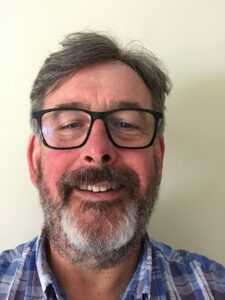 Quality Manager Ger Cadogan explained to Overherd why this is bad news for pasteurised dairy products. “Pasteurised dairy products must be stored under refrigerated conditions at all times from 0°C to 5°C maximum. UHT sterilized milks can be stored at ambient temperatures for up to 12 months, but pasteurised dairy products will spoil in a number of days if not kept properly refrigerated. Poor refrigeration performance in store display units is clearly bad news for our products and can lead to bad customer experiences.”
Thanks to the intervention of our colleague, the short date products were removed from sale and the refrigeration unit was repaired by the store’s refrigeration service contractor.
Ger explains that “we have Quality Teams regularly checking stores to ensure our products are being stored and displayed in the right conditions, but we can all play our part as Glanbia Ireland employees to ensure our products are fit for consumption and can be enjoyed by customers. Some things for people to keep an eye on are: is the product being rotated according to date? Is there adequate shelf life available? What temperature is the fridge running at?”
We can all be advocates for the quality of our products! If you see a problem in a store, please contact our Customer Service Centre or a member of the Quality Operations team whose details are printed on every product pack.

Planet friendly initiatives
Planet friendly initiatives
Avonmore is on track to reduce plastic use by up to 40 tonnes a year!
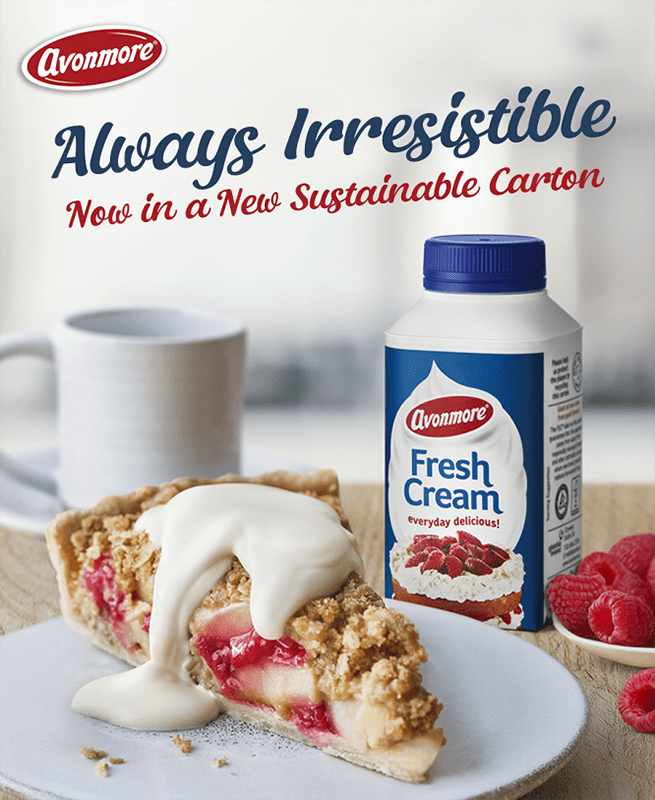
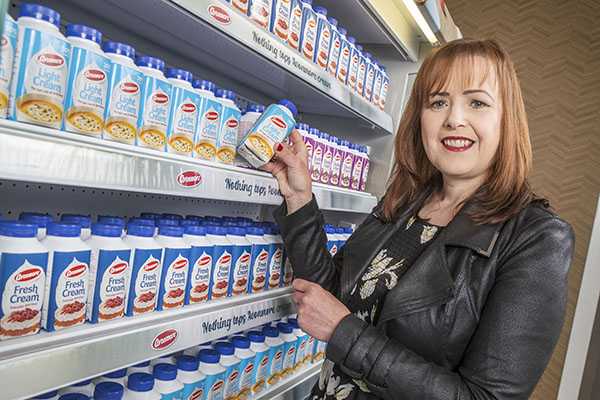
Avonmore’s Fresh Cream range has switched to Tetra Top® cartons, a move which will save up to 40 tonnes of plastic every year, or the equivalent weight of two fully loaded tour buses.
The Tetra Top® packaging contains 62% less plastic than the previous bottles and uses paperboard from responsibly managed forests (Forest Stewardship Council® certified) and other controlled sources where new forest growth replaces harvested trees.
 The switch is one part of Avonmore’s drive to innovate and lead change across its product portfolio, ensuring that 100% of our product packaging is recyclable, reusable or compostable by 2025.
One year on from the launch of Glanbia Ireland’s Living Proof strategy, this latest advancement is in addition to Avonmore introducing paper straws for its EU School Milk Scheme last year – a switch that has already reduced plastic usage by a further 2.7 tonnes per annum.
Speaking at the launch of the new cream cartons, Miriam Walker, Director of Domestic Consumer at Avonmore, said: “It’s the very same fantastic, high quality Fresh Cream but now it comes in packaging that is kinder to the planet. We also ask that consumers play their part in this sustainability journey by washing, squashing and recycling the new Avonmore Cream cartons.”
The future is bright at AQ
The future is bright at AQ
 What are our new Abbey Quarter residents most looking forward to when they move in? We chat to three people leaders about their hopes and ambitions for the new HQ
Tom O’Keeffe
Head of Finance Business Partners, Ingredients and Agribusiness
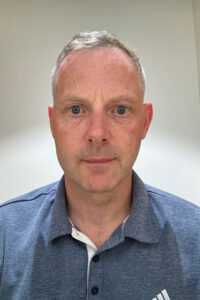 Can you please tell us what your role entails and what teams / how many people work under you?
I lead a team of finance professionals who partner with the Commercial teams to support via insight and analysis on performance and risk management.
Delivery against all our business objectives – PAT, milk price, value add, COVI and cashflow are our key performance indicators and we drive performance day to day via insight and challenge through our S&OP planning process and execution of those plans.
Previously, I supported our Ingredients and Consumer Commercial teams but with the recent changes in our Executive Leadership Team (ELT) responsibilities, our Agribusiness commercial teams fall into my remit under the consolidated leadership of Sean Molloy. Going forward, our team will include 14 people.
Where were these teams previously based?
The teams were previously based in Ballyragget and Purcellsinch in the main. During Covid, we have been predominantly working from home, though return to offices in recent months has gradually changed this.
What are you most looking forward to when it comes to getting people under one roof again?
I’m most looking forward to the informal chats, whether it’s over a coffee, or just bumping into someone in the office. And building relationships again – not just professionally, but personally. Listening to a good joke and having some laughs with colleagues and friends. There is no doubt in my mind, however, that at a professional level, there’s lots to be gained for us all from a more blended working environment beyond remote working. I’m also looking forward to lots of coffee and cake in nearby cafés and restaurants!
Do you envisage all your teams will be together frequently?
As I said above, our team is changing to align behind the ELT changes. Now, more than ever, it’s important that we get together as a team and get to know each other so that we can support and work together better. I’d like to see us evolve to having a set day each week that we all expect to be in Abbey Quarter and then work towards blended working that suits each individual, the team collectively and the wider colleagues we serve.
How do you see Abbey Quarter enhancing collaborative tasks? Do you have any examples of what these might be?
From what I’ve seen to date from the various communications and indeed during a sneak peek of the building a couple of months ago with the Ingredients team, I’m really looking forward to getting the Glanbia Ireland team together in one space. It’s designed with blended working and collaboration in mind, so there is as much space dedicated to collaboration and meeting spaces as there is desk space. I’m looking forward to using the informal collaboration areas for brainstorming and sharing ideas over a coffee. Equally, some of the meeting rooms are specifically designed to ensure remote participants feel as much a part of the meeting as the physical participants. The latest technology solutions will help to ensure the blended working arrangements work for us all.
In terms of the future direction and ambitions of NewCo, do you feel AQ will help us achieve these?
Change and the pace of change is here to stay. When we look backwards, there has been so much change in the last five years relative to the previous 10 years. Our ambition as a Co-op will see that pace of change continue – but our principles and values will be steadfast. Working together, respecting each other, living diversity and inclusion are all founded on strong personal connections across our teams. The Abbey Quarter, bringing so many people together every day, will help cement and strengthen those relationships and equip us all for success.
Robert Shortall
Director of Supply Chain and Operations
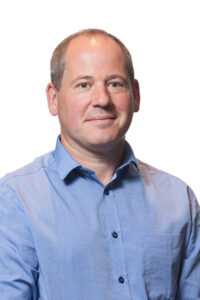 Can you please tell us what your role entails and what teams / how many people work under you?
My role entails leading the Ops&Sc team, with eight people reporting to me directly who collectively look after operations for our nine sites, third party manufacturing, transport, logistics and warehousing, capital projects management, integrated planning and GPS operational excellence.
My own role has a mix, it involves a certain amount of site visits which I enjoy. For the most part however, it involves meetings and collaboration with my immediate team and peers in other functions. Of the nine of us in our team, most will be regular residents of Abbey Quarter and the same is true of my regular peer group who will mostly be based in Kilkenny and so to that end, Abbey Quarter should be the ideal location.
Where were these teams previously based?
It varies. Our three Heads of Operations, along with Eoghan O’Regan in Logistics, travel a good bit from site to site and I imagine that will continue for the most part. The rest of the team have been, like me, balancing a mix of home base and various locations from Danville, Purcellsinch and Citywest to Ballyragget. For this group, Abbey Quarter will become their main base.
What are you most looking forward to when it comes to getting people under one roof again?
For me, the thing I look forward to most is simply having a more regular base. Since things have opened ‘post’ Covid, it’s been a mix of MS Teams meetings and various trips here and there to meet and connect with people. Having a central location for collaboration with all of the functions will be very welcome.
I think it will bring greater efficiency also. While the ‘Teams world’ has some benefits, I think the power of the five-minute corridor catch up has been much missed and the new location will hopefully facilitate a lot more informal, impromptu but productive meetings that we haven’t had that much of lately.
I’m also looking forward to seeing the new space. I haven’t been there yet but by all accounts, it will be very nice.
Do you envisage all your teams will be together frequently?
Yes, certainly more so than today. We all try to stay connected even when we are working remotely but for sure, our new home will lead to us being together more frequently. I’d intend to embrace the blended work model, combining days in Abbey Quarter with trips to sites and the Citywest office with the odd day working from home as well. Hopefully we can make it an inclusive environment where everyone across the business, be they resident or occasional visitor, will always feel very welcome at AQ. I’m sure it will be.
How do you see Abbey Quarter enhancing collaborative tasks and do you have any examples of what these might be?
I’m a fan of an open space office environment, especially when equipped with adequate breakout rooms and spaces so that’s a positive to start with when it comes to effective collaboration. I would be very optimistic about the informal time in an open plan area; certainly my experience of these environments is very positive and leads to a much greater level of real time problem solving and innovative thinking.
In terms of the future direction and ambitions of NewCo, do you feel AQ will help us achieve these?
I think it has to really. It’s ideal timing with New Co announcement too, so exciting times ahead and much to look forward to.
Jill Davidson
Head of Talent Acquisition
 Can you please tell us what your role entails?
As head of TA, I look after all things recruitment related for GI (New Co!) and spend the majority of my time working directly with people (internally and externally) to identify and bring new talent into GI that ensures continued business success and continued growth as well as candidate growth for the future.
How many people are part of your team?
We are currently a team of four in Talent Acquisition. Susan Queally has recently joined me as a Talent Acquisition Specialist, coming from the PLC where she spent six years working on the graduate programme. I also have two interns supporting us, Leonie and Rory, who will sadly be leaving us at the end of this month to return to college. Hopefully we’ll see them again next year as they have been great support.
TA is part of the wider HR team and we work collaboratively with our HRBP’s and hiring managers across the business when it comes to hiring to ensure we are supporting them and successfully securing talent from across all functions of the business.
What are you most looking forward to when it comes to getting people under one roof again?
It’s an exciting time to move into our new collaboration hub. Seeing colleagues and being able to pop over to someone’s desk without having to take an hour out of their diary for a meeting is invaluable. It will be great to network in ‘human form’ again and whilst MS Teams is great, it is always great to get in front of people, especially during interviews / team meetings etc.
I think it will be great to get back to face to face interviews again where possible. Virtual interviews certainly have their benefits, but you can’t beat in-person interaction with a potential new hire.
And let’s not forget the new location – it’s an added bonus to have the lovely Kilkenny on our doorstep and get out and about during lunchtime for walks or after work socially. I’m looking forward to having a gym onsite too!
How do you see Abbey Quarter increasing collaboration?
In terms of collaboration, I think we’ve all learned to handle this very well virtually over the past couple of years, but that sense of being present in a room with colleagues is so beneficial and a lot of work can take place ‘informally’ when people are in the same space.
In terms of the future direction and ambitions of NewCo, do you feel AQ will help us achieve these?
Yes definitely, it’s great to have one space for us to join up and to come together and work collaboratively.
From a TA perspective, we are often the first point of contact for the majority of our new joiners, during interview stages and beyond. As the saying goes, ‘first impressions count’, so I think having the opportunity to bring potential new talent into the AQ building for interviews will be an extremely positive experience for them.
Chewing the cud
Chewing the cud with… Niall Trainor
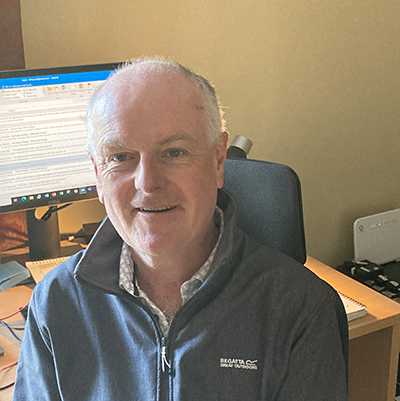
Each month, we put the spotlight on a Glanbia Ireland employee and for our August newsletter, we’re talking to Co-Op Operations Manager Niall Trainor
Co-op Operations Manager, Niall Trainor, is part of a close-knit team based out of Dungarvan which looks after the affairs of 11,000 co-op members, some active in farming, some retired and others deceased.
“Before Project Destiny our team of seven, based in Dungarvan in Waterford, operated in a separate entity from the Glanbia Ireland team. We are now delighted to integrate into the wider Irish business and its 3,500 employees.
“The past few years in particular have been very interesting with lots of growth and change. The acquisition of a stake in the Consumer and Agri businesses in 2017 has enabled us to get close to our colleagues in those businesses through the operation of Trading Bonus and other schemes. I’m lucky to be part of an experienced and committed Co-op team that has dealt with all the change with minimal fuss.”
The Cavan native now lives in Tramore in Waterford, the perfect base from which to pursue his downtime interests in music and theatre, cycling, swimming and “playing bad golf”, Niall says.
There is a great degree of variety in Niall’s role which varies over the calendar year and is also impacted by one-off projects such as Destiny. Many of the key items on the agenda for Niall and his team at the moment stem from Project Destiny, with the completion of the latest spin out of shares to members a key priority. Serving the needs of the Society membership, supporting the Society Council and managing day to day governance requirements form part of the “regular” job.
“Glanbia Ireland has been on a long and sometimes arduous journey over the past decade or more. Going back to our roots as a Co-op owned business augurs well for the future for all concerned. This journey started back in 2012 and it has been a gradual transition since then.
“It’s great to be an Irish business that is 100% Co-op owned. We can continue to run the business commercially but also have some flexibility to support farmers through tough times. It’s critical that we deliver on our promises now, take stock for a while and that we nurture this fantastic business that delivers for our shareholders and for farming communities in provincial Ireland.”
Spotlight on ...
Spotlight on ...
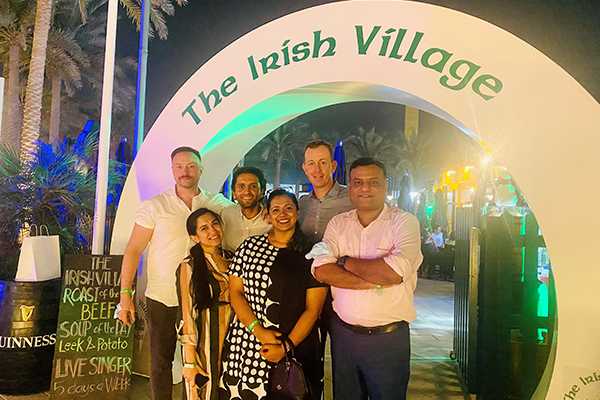
Overherd catches up with the Glanbia Ireland Ingredients Team – Dubai Office
Glanbia Ireland is well established in the Middle East and Africa, supplying dairy products to the region for the last 20 years. The team has grown over the years and there are now eight GII staff at our Dubai office, who are dedicated to growing the business across the Middle East and Africa (MEA). To learn more about the team and its ambitions, Overherd caught up with Kieran Duggan, General Manager for MEA who relocated from Ireland to the UAE in 2013 to develop the Glanbia Ireland business.
 Kieran, please tell us about Glanbia Ireland’s activity in the MEA region.
We established our regional office in Dubai UAE in 2010. This was prompted by the impending removal of milk quotas in Europe and the need for Glanbia Ireland to establish direct routes to market in the region. We have had tremendous growth across the region over the past decade and now have a team of eight permanent staff working from this central sales hub.
Our primary business in the region is the supply of our range of dairy ingredients to B2B customers. These products include fat-filled milk powder, cheese, milk proteins, butter, whole milk powder and skimmed milk powder. These are the key building blocks for dairy finished product manufacturers in the region. As this is a milk-deficit region, as our customers grow, they must import more products. Our key markets in the Middle East region are Saudi Arabia, the United Arab Emirates and Iraq. In Africa, we have key supply positions in Algeria, Egypt, Senegal, Nigeria, Ivory Coast, Mali and Togo.
Why is Irish produce attractive to Middle Eastern customers?
Ireland has long been recognised as a key supplier of dairy ingredients and Glanbia Ireland, as the largest processor of milk in Ireland, has a very strong position in this space. The MEA region imports from the key dairy-producing regions in Europe, the US and Oceania. With the removal of milk quotas, our annual production has grown significantly over the last five years; Glanbia Ireland processed over three billion litres of milk in 2021 from our 5,000 family farms. This increase in production has been attractive to buyers and brought Ireland as an origin for supply to greater attention. Buyers seek out European supply given its closer regional proximity to the USA and Oceania and the challenges of the supply chain during Covid-19 brought this into more focus.
What challenges has Glanbia Ireland faced exporting to the MEA?
Business in the region has been traditionally conducted face-to-face. It requires investing time with the customer, understanding their needs and wants and responding to them in a timely manner. There is an expectation that a supplier invests in the region if they are going to secure business continuity. Taking a position to establish our customer-facing sales team in the region demonstrated this intention and has opened opportunities for us, year-on-year. We are close to the key markets, working in their time zone and sensitive to changes in market conditions. Post-Covid and the widespread adoption of virtual meetings does help the ability to access key customers once a relationship has been established, but new business development needs to still be led by feet on the ground.
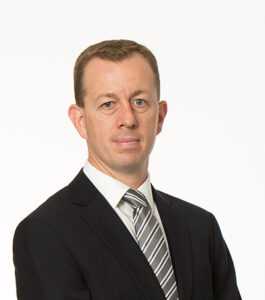
Our colleagues in Dubai are pictured from left to right Paul Costello, Regional Manager West Africa; Kieran Duggan, General Manager MEA; Parveen Kasim, Customer Service; Keren Aguinaldo, Customer Service; Nitin Agarwal, Regional Manager, Middle East. Also part of the team but not included in the photo are Vipan Kumar, Regional Manager, Indian sub-continent; and Karim Yacoubi, Regional Manager, North Africa.
What are the future plans for the region?
We see continued growth in our fat filled milk powder portfolio and will respond to the development in this category. There is significant innovation happening within this space. Our Millac brand has a long legacy in the region and gives us a very good position from which to build on the next generation of products. We also continue to build on our range of branded solutions tailored to respond to customer challenges.
Our CheddMax functional cheese solutions range provides performance benefits to processed cheese recipes but also as ready-to-use solutions such as tabletop, retail, foodservice and as an ingredient cheese. Our Opti-Yo range provides a range of solutions for yogurt manufacturers including high-protein solutions, low lactose solutions or indeed, plant-based solutions. We are still at the early stages of our journey in foodservice and B2C in the region, but see good opportunities in some niche categories such as cheese and UHT Cream. We are present in foodservice with the Wexford brand across the Gulf Cooperation Council (GCC) and use a number of appointed distributors.
For Irish companies to be successful in MEA, we must reach out and invest time and resources. We must be sensitive to their culture, ways of working and traditions. It’s a large region and a critical assessment of the business opportunity must be done in advance. We work with government agencies like Bord Bia and network across business industries in each target country. This way, we plan to continue to develop strong relationships with our customers and potential customers in the MEA region.
Best in class milk
Best in class milk
Glanbia recently hosted an event to help maintain high quality milk standards
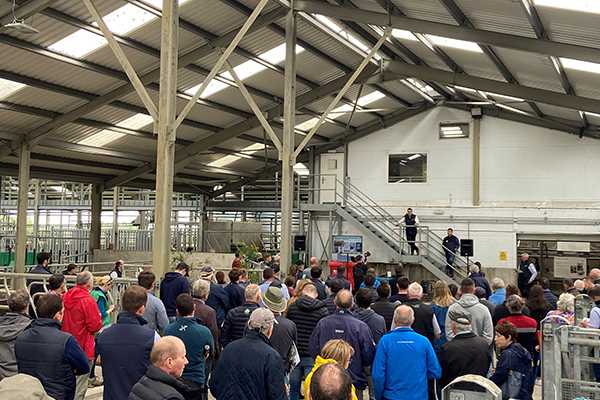
Maintaining high quality milk standards year-round is critical to Glanbia Co-op’s continued success. With that in mind, GI recently hosted a one-day event at the UCD Lyons Farm in Kildare which was attended by a large number of enthusiastic and engaged Liquid Milk Suppliers.
Organised by the Milk Supply Function, the event was an opportunity to impart technical information and meet face to face with milk suppliers. Throughout the day, the over 100 milk suppliers in attendance learned from industry / Glanbia experts about milk quality issues and how they can be resolved to ensure Glanbia Ireland produces best in class milk all year round for our consumer brands.
Talking to Overherd about the event, Brian Hanafin, Head of Milk Pool and Technical Development at Glanbia Ireland, paid tribute to the various teams from across the business for pooling their efforts and making it such a success. “The event was very important from a technical and a social viewpoint. Gatherings and workshops like this are all about the team working together, continuing to support and underpin our leading position in liquid milk brands and working collaboratively with our Milk Suppliers. Events like this will be rolled out across the region.”
Presenting to attendees, Thomas Ryan, Senior Sustainability Manager at Glanbia Ireland discussed Glanbia’s sustainability strategy ‘Living Proof’ and what it means for farmers going forward. Thomas showcased Glanbia Ireland’s Sustainability Action Payment and the suite of 18 different actions available to farmers in order to receive the payment. Jean Colleran, horticulturalist at Glanbia Ireland, discussed some of the actions farmers can take on their farms, such as planting native trees and hedgerows.
Dr. Dave Gleeson of Teagasc and Gordon Gray, Regional Milk Supply Manager at Glanbia Ireland, spoke about minimising thermoduric numbers in bulk tank milk and the move towards chlorine-free detergent use.
At the mastitis control stand, Joris Summers, Veterinary Practitioner at Glanbia Ireland and Katie Dwane, Quality Manager at the Glanbia Central Laboratory, outlined the actions farmers can take to reduce mastitis and control SCC.
Jerry Cronin, Milk Supply Manager at Glanbia Ireland, focused his discussion on the fight against bacteria in the milking machine and bulk tank.
Finally, rounding off a fantastic day in Kildare, the Marketing team was on hand to engage with suppliers and share with them our top quality and multi award-winning products.
.

You Are The Difference
You Are The Difference
GI’s customer service programme is bearing fruit and improving customer experience across the board
Launched in February this year, Glanbia Ireland’s customer service programme ‘You Are The Difference’ aims to enhance our Agri and CountryLife customers’ experiences across our branch network (read more about the programme from the March edition of Overherd).
The program is designed to introduce a cultural shift in the way branch colleagues interact with customers, using methods and techniques that lead to increased customer satisfaction and increased sales.
As part of ‘You Are The Difference’, mystery shoppers have already visited all 52 retail branches and will pay them all another visit before the end of the year to see how the programme is progressing. Following the first round of visits, a fantastic 16 branch colleagues achieved a high score of over 80% during the mystery shop!
They are:
- Beryl Lanigan
- Dean Mason
- JJ Winters
- Jack Kearney
- Jane Drought
- Kay Kilgallon
- Liam Brazil
- Maeve Hoey
- Marie Heavey
- Mark Hayden
- Michael Kealy
- Paudie Dunphy
- Raymond Ryan
- Seamus O’Dea
- William Brennan
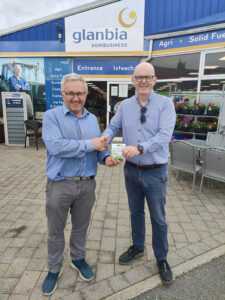 Another to be recognised was Mark Morrissey, who is our Branch Manager in Bunclody. Mark (left) is pictured with Senior Operations Manager Robert Kehoe, who presented him with a gift voucher recently. Congratulations to Mark and everyone else who’s been making a positive difference to customers’ experiences.
Get to Delicious
Get to Delicious
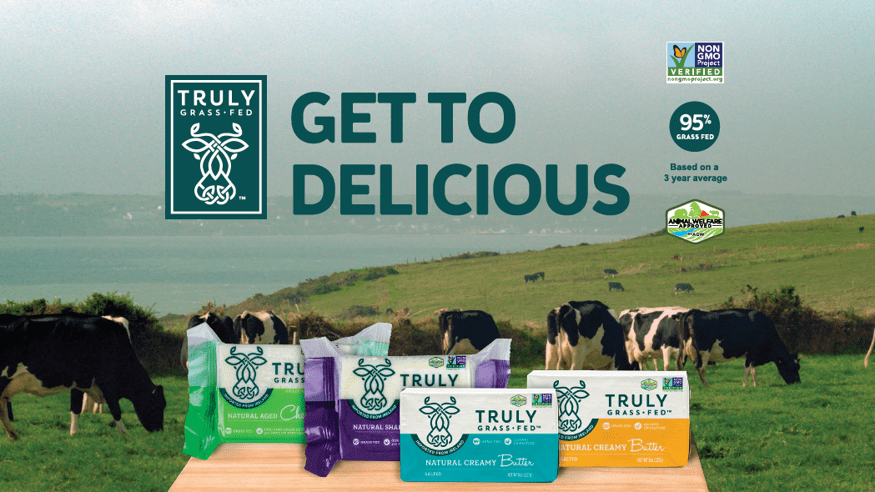
A new consumer campaign for Truly Grass Fed has launched in the US
The TGF team recently launched its ‘Get to Delicious’ advertising campaign focusing on US consumers in New York, Boston, Atlanta, Jacksonville, Tampa and Colorado markets.
The campaign targets “Foodie Explorers” who seek out the finest foods that are delicious, good for them and good for the world.
Truly Grass Fed perfectly delivers on what the target audience is seeking – incredibly tasty cheese and butter without any trade-offs because of the brand’s commitment to quality, animal advocacy and sustainable farming practices.
Get to Delicious is running across social media channels including Facebook, Instagram and TikTok, plus on paid ads on Google search and YouTube. In print, an advertorial is running in the September issue of Food & Wine magazine, while a TV commercial is featuring on Connected TV, Hulu, Roku, Samsung TV, Disney, Discovery and Sling services.
Innovation ahead
Innovation ahead
Plant Director at Kilkenny Cheese Ltd, Sybram van Beem, shares with Overherd his excitement about building a new cheese factory at Belview
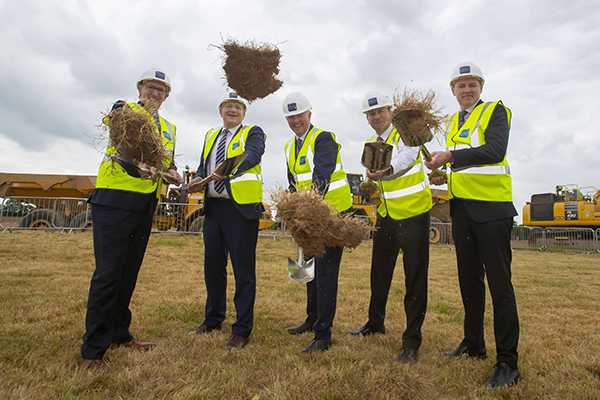
Pictured at the turning of the sod on Glanbia Co-Op and A-ware’s €200 million continental cheese facility at Belview County Kilkenny are from left John Murphy Chairman Glanbia Co-op; Jan Anker, Chief Executive of Royal A-ware; Jim Bergin, Chief Executive of Glanbia Co-op; Tánaiste Leo Varadkar; Charlie McConalogue TD, Minister for Agriculture, Food and the Marine
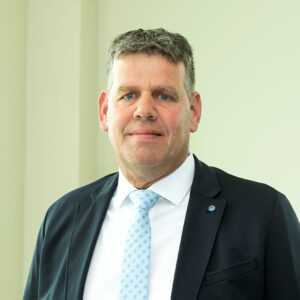
Sybram van Beem is the Plant Director at Kilkenny Cheese Ltd (KCL) in Belview, which is Glanbia Co-op’s new joint venture with Dutch food company Royal A-ware. The ceremonial sod was recently turned at the new continental cheese facility in South Kilkenny, and with Sybram in attendance, Overherd took the opportunity to catch up employee number one of KCL who’s originally from Friesland in the northern Netherlands.
Congratulations on your new role with Kilkenny Cheese Ltd. Perhaps you could give our readers some details of your career and the journey that has taken you to Kilkenny?
Thank you, it’s very nice to be introduced to everyone at Glanbia Ireland and thank you for the invitation to be interviewed. My background is mainly with Friesland Campina where I worked for over 25 years, mostly in cheese production and supply chain but I also worked for the infant food and toddler division. During that time, I was the plant manager at several big production facilities, but I never had the opportunity to start up a new greenfield production facility, which has always been one of my ambitions. So, when I got a call to see if I’d be interested starting up a new cheese factory, I couldn’t resist the opportunity.
Regarding your background, are you from a farming family?
Not directly, as my father was a schoolteacher, but his father was a dairy farmer and I grew up in the Northern part of Friesland, which is a rural area, a bit like the southeast of Ireland. As my best friend at school was a farmer, I used to spend a lot of time at his farm, giving a helping hand with some work, driving tractors, hand milking cows etc. so I’m very familiar with farm life.
Can you tell us about your new role as Plant Director at Kilkenny Cheese Ltd.?
In a nutshell, the role is to ensure that the factory successfully meets all requirements from our customers, employees and both joint venture partners. We aim to start processing milk from farmers in the southeast of Ireland from January 2024 onwards. Products that we are aiming to produce are for example Gouda and Edam cheeses, the so-called continental cheese types. This will open up a completely new market for Irish dairy and in light of the Brexit issues, also enables Glanbia to divert milk from Cheddar into different cheese types.
Before we get to that point, of course we have to build the factory and part of my role will be overseeing this, ensuring the right equipment is installed, operational readiness planning etc. etc. We’re investing €200m in the plant but one of the most important elements is finding and training the right people for the job and enabling them to produce high quality continental cheese. The factory will be built, I’m sure of that, but the people are the key ingredient to run it successfully.
That’s very interesting, could you tell us about the process for making continental cheese?
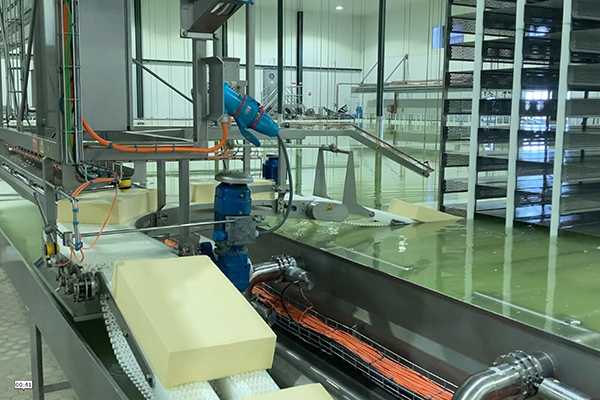
Yes, the first steps in the process you can compare with making Cheddar. After receiving the milk, we standardize the milk on fat, the milk gets pasteurized and is pumped into the cheese vat. The recipe in the cheese vat has additional steps in comparison with Cheddar. After coagulation and cutting of the gel, we withdraw a part of the whey from the cheese vat and we add warm water to wash the curd. When the curd is ready, we fill the curd via a Casomatic in cheese moulds. The Casomatic looks like a Block former but has three sections where we can drain the last whey from the curd. After filling the cheese moulds, the curd gets pressed in the pressing system to a firm block. After demoulding the cheese floats in the brine bath where it stays for max three days. In the brine bath the cheese gets salted and that is also a big difference with Cheddar, which is dry salted. After the brine, the cheese is packed in plastic film and after maturation the cheese is ready for our customers.
A very interesting part of this joint venture is that we will be producing continental cheese with Irish milk, which is different compared with the Dutch producers. The milk is mainly coming from grass fed cows and we hope to leverage on the authenticity and reputation of the Irish Dairy.
How about you personally, are you planning on moving to Ireland?
Yes, I’m currently looking for a house and I’m planning on moving over at the start of next year. In the meantime, with Ireland being only a five-hour journey from my home, I will travel back and forth a lot, particularly when it comes to interviewing new employees for the factory. My wife and I will maintain our house in the Netherlands as we plan on moving back eventually. My kids are all over 20 so they won’t be moving, but I look forward them visiting us while we are here.
I’m a sports fan, particularly of the Ajax football team and Formula 1 where I enjoyed seeing Max Verstappen win the world championship last season, which was like a rollercoaster of emotions and tension. While moving to Ireland, I’m interested in learning more about the culture and I’ve recently heard about Hurling, which I hope to see someday.
You met a good number of Glanbia Co-op employees at the sod turning event and through other interactions, what are your impressions and how do you feel the cultures of Glanbia Co-op and Royal A-ware will combine?
I’ve met a lot of Irish people and I think they’re very open and welcoming. From my meetings with the GI employees, I see they are open, friendly and hardworking. I think it’s a very good match with people from A-ware where there is also a ‘can-do’ mentality and working together to ‘get the job done’. There were a lot of roadblocks in the KCL project but both companies never gave up and you can see that everyone involved is eager to make the project successful. I think within Glanbia you have a lot of knowledge about technology, milk, and farming – this is similar on the A-ware side – and we can make the best of both worlds and grow something beautiful.
What are you most looking forward to over the coming years as the Kilkenny Cheese Ltd project progresses?
The start-up of the cheese factory is always the most complicated part, and of course there will be unforeseen events and complications, but I think if we can stay together as a team, we can overcome any challenges. Having a good start of the factory is the main goal, once the ramp up is finalised, we can also look into innovations. A smooth start with a good team of people is what I’m most looking forward to.
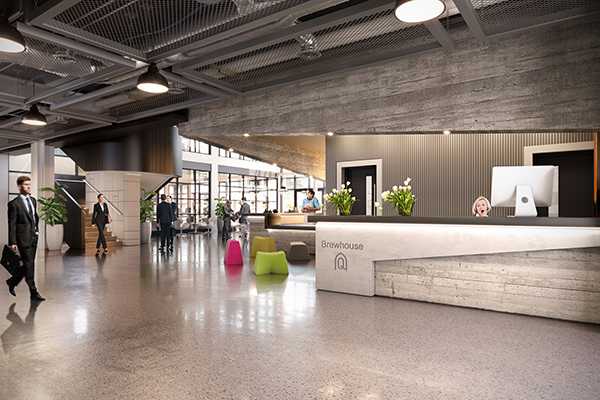
Abbey Quarter – Connect, Collaborate, Complement
Abbey Quarter – Connect, Collaborate, Complement
Glanbia Co-op’s new collaboration hub is currently undergoing its fit-out stage, so it won’t be long until colleagues occupy our brand-new offices at the Abbey Quarter in Kilkenny
As anchor tenants, our company will be located in a state-of-the art building which forms part of a wider 645,000 ft squared development of mixed use residential, commercial, retail, educational and civic spaces.
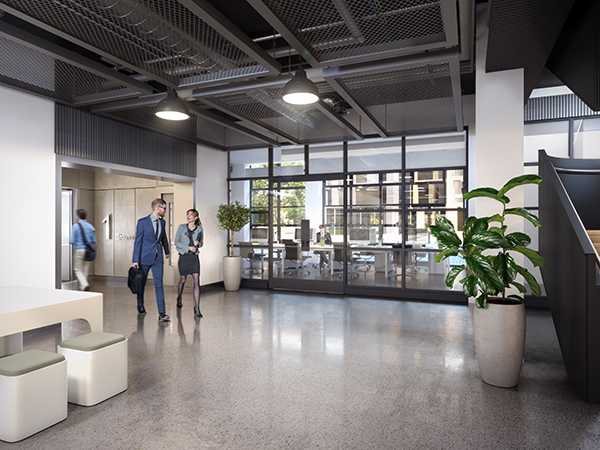
The building design has been thought of in a post-pandemic world and shaped with today’s, modern employee in mind. Three core principles of Connecting with people and place, Collaborating to realise potential and Complementing a hybrid lifestyle form the vision of how the building will operate. It’s built to enhance the work lives of all employees and advance our company’s ambitions.
Colleagues from three GI offices in Kilkenny will soon be calling the Abbey Quarter their base and Overherd at Glanbia Ireland was keen to get some thoughts on the big move!
Jane Maher
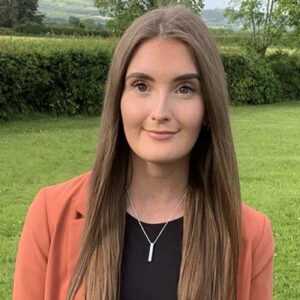 Jane is currently based at our Purcellsinch offices in Kilkenny where she works in E-commerce / Marketing as part of the Agri team. Having started with Glanbia Ireland in 2019, about six months before the pandemic began, Jane has some very recent experience of moving from being full-time in the office to fully remote and she’s now enjoying the hybrid lifestyle.
Overherd at Glanbia Ireland caught up with Jane to get her thoughts on the upcoming move to Abbey Quarter and what this will mean for her working day.
You’ve been through the pandemic and hopefully out the other side! Through all these changes, what have you learned about your ways of working?
When Covid hit and we went to fully remote working it was a big change for all of us but as I got used to it, I found it fitted in better with my day-to-day life. Now that we’re in a hybrid style of working, I’m in the office one or two days a week. In general, I think I prefer working from home, but when we were at home for so long, I really welcomed the opportunity to go back to the office. If I had to pick a particular way of working now, I’d have to say hybrid is my preferred approach.
What do you feel are the advantages of going into the office rather than working from home full-time?
It’s purely the human interaction, the social side of things, being able to grab a quick coffee with someone rather than having to set up a formal meeting online. I suppose things just feel a bit more natural meeting people face to face.
With the move to Abbey Quarter on the horizon, have you been down to the site yet? Is there anything you’re looking forward to when you’re working from there?
I haven’t had the chance to go down there yet but I’ve been excited by what I’ve seen so far during the info sessions about the move – it looks unbelievable! I’m looking forward to experiencing the different ways of working and the different spaces the building will offer. In Purcellsinch at the moment, it’s very much just desks and meeting rooms, whereas what we’ve seen with Abbey Quarter is there are many more collaborative spaces, there will be opportunities to work cross-functionally and nice places to even just go for a chat. I think the likes of the modern canteen, training rooms and the gym will contribute to people’s work life balance as having all those things under the one roof will make the building not just work focused.
How do you think you will use the building? Will you go into AQ for a defined number of days per week?
I’m actually really eager to go in, firstly to see the building, but going forward I’m looking forward to splitting my time between home and Abbey Quarter. Having the option to book a desk and park my car for a few hours in the morning, meeting people face to face in the collaborative spaces and then going home to work for the afternoon having met friends for coffee in town are all nice options to have. As the building is built with hybrid working in mind, I think it will encourage me to go into the office more and make the most of its features and everything else Abbey Quarter and Kilkenny have to offer.
Abbey Quarter will have a lot of technology built into it, such as the desk booking and car parking apps. How do you feel about these aspects of the building?
I’m very open to them. I suppose it will be like trial and error, I have a bit of apprehension about how they’re going to work, like will I book a parking spot and find someone else has taken it? But it will be interesting to see how it all works in practice and I think if everyone uses the tech to its full potential, it will work very well.
What about the new building’s sustainability credentials. Is this something that’s important to you?
From what I’ve seen, sustainability was a key focus in the design of the building, which is great as it’s really important. Having things like the smart control lighting and spaces for bicycles and charge points for electric cars is really positive. Even the fact that employees know they’re in a sustainable building and working for a company that supports this adds to job satisfaction.
Muireann Byrne
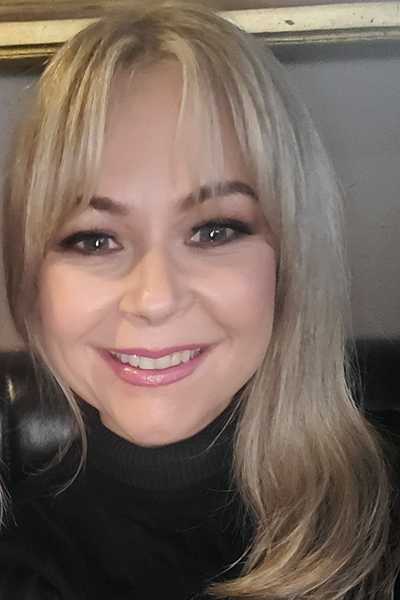 Muireann is a Kilkenny woman living just over the border in Co Laois. She originally started working with Glanbia in 2014 and left for a brief while in 2018 before re-joining Glanbia Ireland in 2020 as a Financial Accountant, just as the pandemic was kicking off in Ireland. Having only been in the Danville office sparsely since re-joining the company, Muireann told Overherd that she’s “very excited about the move to Abbey Quarter”.
What are you particularly looking forward to about the move to Abbey Quarter?
I suppose the Glanbia brand is synonymous with Kilkenny and the southeast, so to be going into such a state-of-the-art building on what was the old Smithwick’s site, which was also a very big Kilkenny brand, makes me feel very proud and fortunate to get to work in this building.
From what I’ve seen, I think walking into the atrium part of the building every morning will be special. It’s so bright, airy and open and will set a nice tone for the day. Being in the centre of town is also a nice bonus, being able to meet people for lunch and get out for a walk in the public spaces around Abbey Quarter.
You’ve been learning about the new building through some information sessions recently. Is there anything that’s stood out for you from these sessions?
We spend so much time in our lives working, so to be able to do so in such a lovely building with lovely surroundings is a big positive. Also, with me living 35 minutes from the office, having the ability to work flexibly is very appealing to me. As a function, Finance interacts with most parts of our business, so I think working in an environment which is designed for collaboration can only be a major positive.
The information sessions were great and it’s incredible how much work has gone into this project. The team behind it has obviously thought of everything and real credit must go to them. The building is so bright and importantly it’s been built in and will be run in the most sustainable manner. Added to that, the design concept of blending industrial architecture with materials and colours taken from the Irish landscape perfectly reflects our brand and the site AQ is on.
Do you feel our new offices will enhance your hybrid lifestyle?
I’d see myself working at least two days a week in the office and going in for full days. I’m an early bird who likes getting the more intensive tasks done early in the morning, so I’ll probably be one of the first people in the office each day. Ideally, I’ll probably do my work from home towards the end of the week. What the lockdown has taught me is that the opportunity to go for a walk at lunchtime is now a priority in my day and it’s a refreshing break from the computer. The location of Abbey Quarter is perfect for this with the lovely river walk. I see myself bringing the best of what I’ve learned during lockdown into the office as well.
I think the ability for the office to work around people’s lives will drive efficiency because people will be happy to be in their new surroundings and getting the best of both worlds. I’m really looking forward to getting into the office, if only for two days a week to build new relationships with colleagues. I’m looking forward to the mix of working on more social and collaborative tasks when in Abbey Quarter and the more head down, intensive tasks when working from home.
Rory Hannon
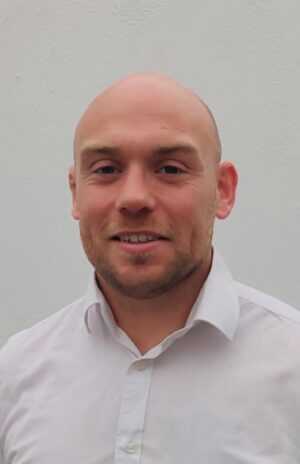 Rory started with Glanbia Ireland in February 2019 and was based in Ballyragget up until the pandemic began. Since then, he’s been mainly working from home in Waterford. He’s looking forward to the Abbey Quarter move and connecting with colleagues again a couple of days a week or as is required in his role.
Being based in Waterford, how do you feel about the move to Abbey Quarter?
I live in Waterford City, so I’m looking forward to shaving a good bit of time off my commute when compared to the time it took to get to Ballyragget, which used to take me over an hour. All going according to plan and getting into the office during non-rush-hour periods, the journey should take about 45 minutes. Combine this with hybrid working and it will be better for my pocket and the environment.
I was lucky to get a tour of Abbey Quarter back in March. The fit-out hadn’t started at that stage but even then, it was easy to see how impressive the building would be when complete. As part of the old brewery, it looks like a unique building; the entire place looks open with bright spaces and it’s well thought out with the neighbourhoods for different departments. The views out the windows are impressive, especially the top floor with the views over the city.
Connecting and collaborating with colleagues is a big part of the building design. Are you looking forward to these elements of being back on-site?
There’s a good bit of collaboration as part of my role, mostly in the commercial function itself, which is quite large. I’m really looking forward to connecting with colleagues in my own function but also other parts of the business. Working from home definitely has its advantages but I have missed the social side of being in the office. Added to that, I think you get a better feel for what’s going on in other parts of the business through informal chats when getting a coffee or just bumping into people. With the new offices, there seem to be so many communal spaces and open areas that it will make it easy to catch up with people in an informal way, whereas I feel conversations on Teams generally have to be set up and are more formal.
Presumably there’s a strong external focus to your role too. Has the Customer Experience Centre been brought to life for you?
The Customer Experience Centre is really going to add value to our business. We’d have a number of customers that visit us regularly and it will give us the opportunity to showcase all that’s best about our ‘NewCo’, its people, purpose vision and values. It will also help us to position NewCo with new and existing customers as one of Europe’s leading processors, with deep ties within the local farming community and an inspiring range of value add dairy and plant based ingredient solutions.
How do you feel the office will fit around your lifestyle?
I’m really looking forward to using the gym. I think the modern office requires a gym, it really encourages people to get active which is good for physical and mental wellbeing. Another thing I’m looking forward to is access to Kilkenny City. Being from Waterford and based in Ballyragget, I haven’t gotten to experience Kilkenny that much, so the advantage of being in the heart of the city is being able to find some good spots for lunch and coffee, or even go for a drink after work. And living close to the train station in Waterford, this also opens up new ways for me to commute if I want to leave the car at home.